
How to Create the Perfect Charcuterie Board: A Beginner’s Guide
Creating a charcuterie board is both an art and a crowd-pleasing way to entertain. Whether you’re planning a holiday party, casual gathering, or cozy night in, a well-designed charcuterie board brings together flavor, texture, and visual appeal. With a few thoughtful choices, anyone can learn how to build a beautiful and balanced charcuterie board.
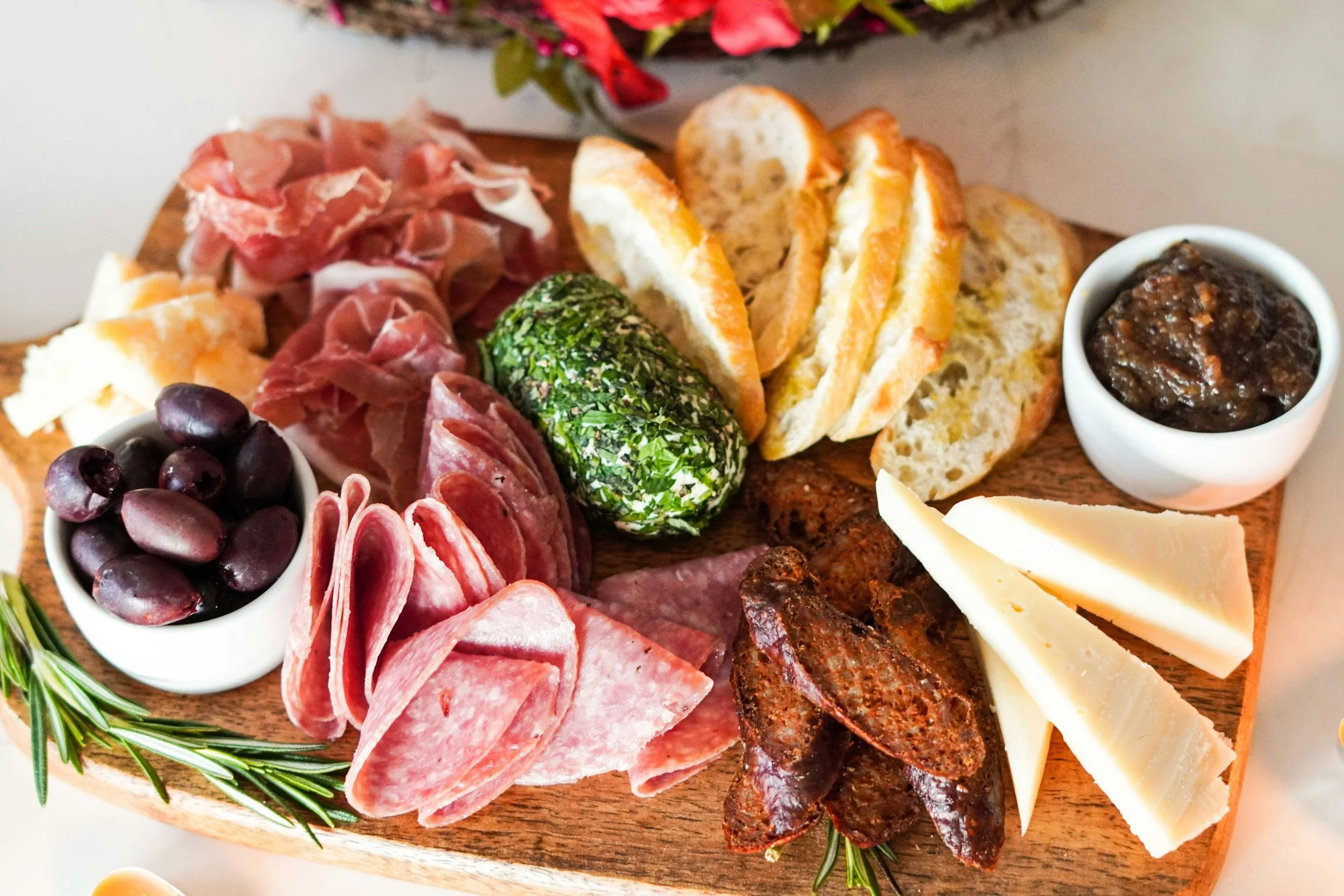
When in doubt, aim for a starch, a meat, a cheese, and a spread!
Start with a Balanced Foundation
The key to a great charcuterie board is balance—both in flavor and in variety. A well-rounded board brings together salty, creamy, sweet, and savory elements that complement one another. A classic charcuterie board includes a mix of cured meats, cheeses, fruits, crackers, and spreads, creating a visually appealing and satisfying experience for guests.
Begin with charcuterie meats such as salami, prosciutto, soppressata, or pepperoni. Offering two to three types of meats with different flavor profiles—mild, smoky, or spicy—keeps things interesting. Fold, roll, or fan the slices rather than laying them flat to add height, movement, and texture to your board. These small presentation details make the board feel abundant and thoughtfully styled.
Next, select a variety of cheeses with different textures and flavors. Aim for at least three: a soft cheese like brie or goat cheese, a semi-hard option such as gouda or gruyère, and a firm or aged cheese like cheddar or manchego. Including both mild and bold cheeses ensures there’s something for every palate. Be sure to let cheeses sit at room temperature for about 30 minutes before serving so their flavors and textures can fully shine.
Add Seasonal Fruits and Sweet Elements
Seasonal ingredients elevate both flavor and presentation. Fresh and dried fruits add natural sweetness that balances salty meats and rich cheeses while bringing color and freshness to the board. In winter, apples, pears, pomegranate seeds, dried figs, and dried apricots work beautifully. In warmer months, grapes, berries, peaches, or melon are excellent choices.
Choosing seasonal produce not only improves taste but also helps your charcuterie board feel intentional and curated. Dried fruits are especially helpful for filling small gaps on the board and providing concentrated bursts of flavor that pair well with aged cheeses and cured meats.
Include Crunch and Texture
Texture plays a major role in creating a satisfying charcuterie experience. Crackers, crostini, or sliced baguette provide the essential crunch needed to balance soft cheeses and spreads. Offering multiple options—such as a neutral cracker alongside a seeded, herbed, or flavored variety—allows guests to customize each bite.
Nuts like almonds, walnuts, or pecans add warmth and depth to the board. Candied or lightly spiced nuts can introduce an extra layer of sweetness and complexity, while roasted nuts bring savory richness. Scatter them in small clusters to add visual interest and keep the board feeling full.
Don’t Forget Spreads and Accompaniments
Small bowls of spreads and accompaniments can transform a good charcuterie board into a great one. Popular options include fig jam, honey, whole-grain mustard, olive tapenade, and apple butter. These additions encourage guests to mix and match flavors and discover new pairings.
Sweet-and-savory combinations—like honey drizzled over blue cheese, fig jam paired with prosciutto, or mustard alongside sharp cheddar—add excitement and elevate the overall tasting experience. Use small ramekins or bowls to keep spreads contained and easy to serve.
Focus on Presentation
Presentation is just as important as flavor when it comes to charcuterie. Start by placing cheeses and small bowls on the board first, spacing them out to create natural anchor points. Arrange meats around them, then fill in gaps with fruits, nuts, crackers, and garnishes.
Fresh herbs such as rosemary or thyme can be tucked in for a finishing touch that adds both color and aroma. A full, abundant look is more inviting than a sparse layout, so don’t be afraid to let elements overlap and flow naturally. The goal is a board that feels generous, effortless, and welcoming.
Keep It Simple and Enjoyable
The most important rule of charcuterie is flexibility. There’s no single “right” way to build a board, and it should reflect your tastes, your guests, and the occasion. Adjust ingredients based on dietary needs, preferences, or the season, and don’t stress about perfection.
Whether simple or elaborate, a charcuterie board is meant to bring people together. It’s an easy, beautiful way to entertain—inviting guests to gather, snack, and savor each bite at their own pace. When built with balance and intention, every board becomes a shared moment worth enjoying.
Let Bites of Bliss Build You a Board:
Creating a beautiful charcuterie board is all about balance, variety, and thoughtful presentation—from selecting complementary meats and cheeses to layering in seasonal fruits, crunchy textures, and flavorful spreads. When these elements come together, the result is a board that’s as inviting as it is delicious, designed to be shared and enjoyed. Whether you’re hosting a small gathering or planning a special event, charcuterie makes entertaining effortless and memorable. For expertly crafted boards that take the guesswork out of entertaining, reach out to Bites of Bliss Charcuterie for all your charcuterie needs in Milwaukee, Wisconsin, and let us bring bliss to every bite.